What the Mimosa Festival Is
Every February the hillsides around Herceg Novi turn bright yellow as the mimosa trees burst into bloom. The town celebrates with a festival that has run continuously since 1969, making it one of the oldest flower festivals on the Adriatic coast. For two to three weeks the streets fill with parades, concerts, food stalls, and the sweet, honeyed scent of mimosa blossom carried on the mild winter air.
The festival has a distinctly local flavour. It is not a tourist spectacle aimed at cruise visitors, most of the events are organised by neighbourhood associations, school groups, and cultural societies. The masked ball, the boat procession in the harbour, and the fish feast nights feel like genuine community celebrations that visitors are welcome to join rather than observe from a distance.
Origins of the Festival
The festival was established in 1969 to celebrate the unique microclimate that allows subtropical plants to flourish in Herceg Novi while the rest of the Montenegrin coast is still in winter. Mimosa (Acacia dealbata) was imported from Australia in the 19th century and found ideal growing conditions on the sheltered south-facing slopes above the bay. The trees now grow wild throughout the town and the surrounding hills, and their February flowering has become the unofficial start of spring on the Boka Bay.
Festival Events and Highlights
The main events include the Mimosa Parade, a procession of decorated floats through the town centre, the Queen of Mimosa beauty pageant, the traditional Fish Evening where the entire waterfront becomes an open-air restaurant, and the masked ball held in the Kanli Kula fortress amphitheatre. Smaller events run throughout the festival period including children's workshops, mimosa branch weaving demonstrations, honey tastings from local beekeepers, and guided botanical walks through the town gardens. Most events are free or very low cost.
The Parade Route
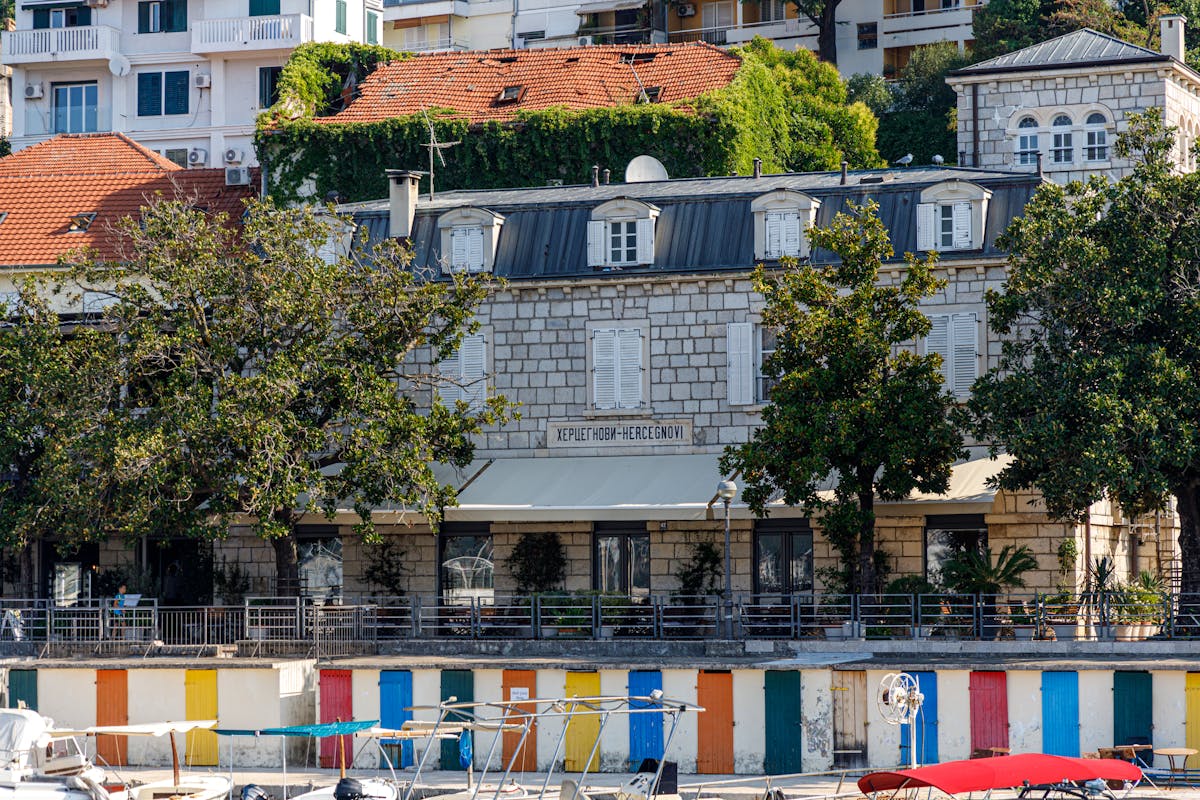
The main parade runs along the waterfront promenade from Igalo to the old town square, with floats, brass bands, and dancers in traditional costumes. The route passes through the heart of the town and the atmosphere is festive and relaxed. Spectators line the promenade walls and the cafes along the route fill up early. After the parade the crowds spill into the old town staircases, for more on the vertical geography of the town, see our guide to the 100,000 steps of Herceg Novi.
Getting There in February
February is low season, which means uncrowded roads, easy parking, and significantly lower car hire rates. The drive from Tivat Airport takes around forty minutes along the bay road, which is well maintained year-round. Temperatures typically sit between 8 and 14 degrees Celsius, mild enough for outdoor walking but cool enough for a jacket. The combination of low-season pricing, mild weather, and the festival atmosphere makes February one of the most rewarding months to visit. If you have extra time, combine the festival with a spa session at the Igalo Institute nearby, see our guide to Igalo's spa heritage.
Practical Tips
- Dates: Usually the last week of January through mid-February. Exact dates change yearly, check locally.
- Accommodation: Book early. Despite being low season, the festival fills the town's hotels and apartments.
- Weather: Mild but variable. Bring layers and a light waterproof jacket. Rain is possible but rarely persistent.
- Car hire: February rates are the lowest of the year. Book through us for Herceg Novi centre or Tivat Airport pickup.