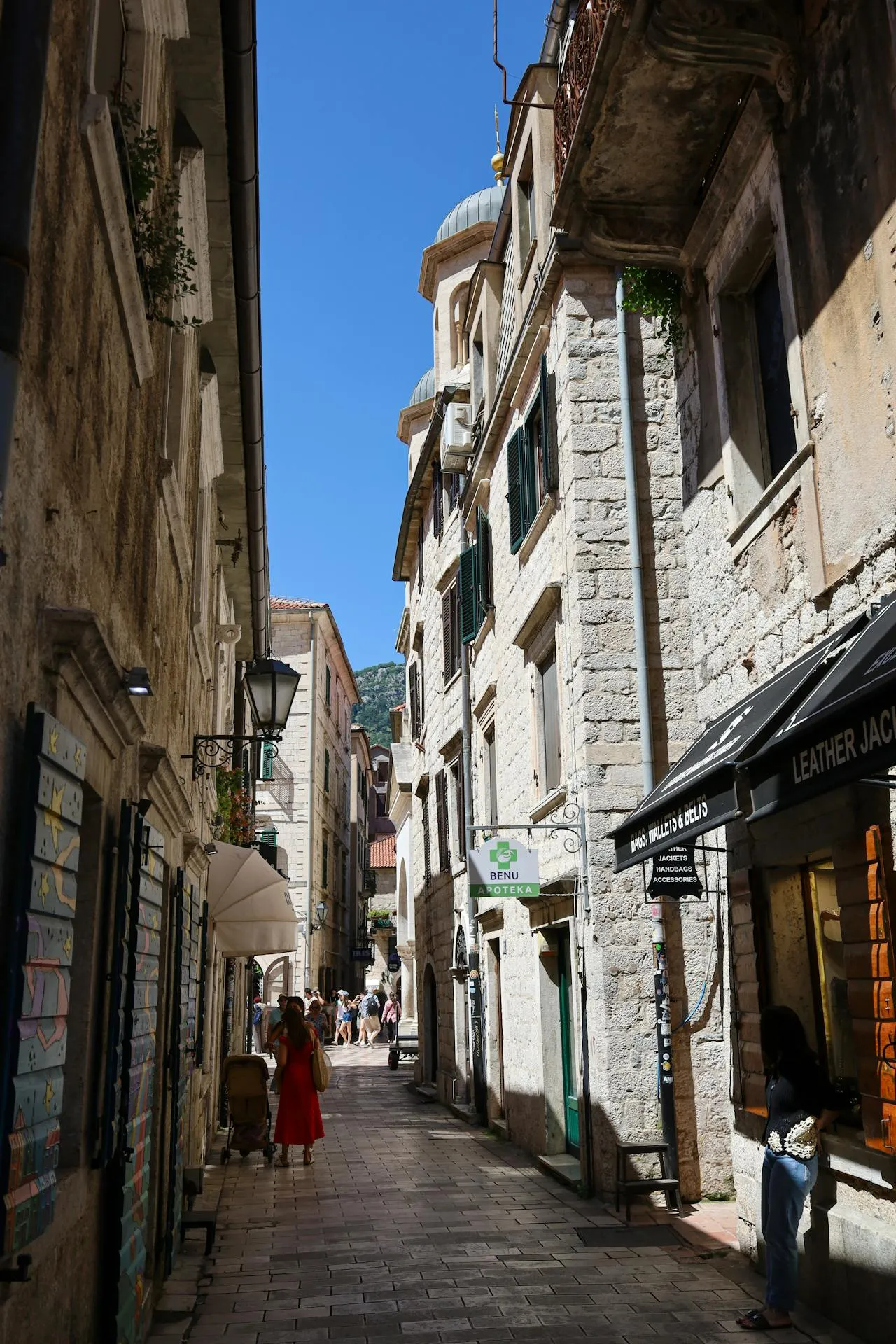
Kotor, From Mimosa Groves to Medieval Walls
The 45-minute drive from Herceg Novi to Kotor is one of Europe's great coastal journeys. The road hugs the waterline of Boka Bay, passing through Risan's ancient mosaic quarter and the baroque stillness of Perast before the medieval walls of Kotor appear around the final bend. After mornings spent among the botanical gardens and spa terraces of Herceg Novi, Kotor provides a striking counterpoint, all stone ramparts, candlelit churches, and narrow lanes climbing toward St. John's Fortress.
A rental car from Herceg Novi gives you the freedom to linger in Perast on the way, stop at a waterside restaurant in Risan, and arrive in Kotor on your own schedule. Parking can be scarce in summer near the Old Town gates, but larger car parks on the approach roads handle the overflow well.
Landmarks
St. John Fortress
The climb to St. John's Fortress follows 1,350 steps up the mountainside behind the Old Town. The panoramic view from the top, the entire bay spread below, cruise ships reduced to white specks, the Adriatic shimmering beyond the mouth, rewards every step. The Contarini Tower and Our Lady of Health Church mark the ascent.
St. Tryphon Cathedral
Built in 809 AD and reconstructed after the 1124 earthquake, St. Tryphon Cathedral anchors Kotor's main square. Its twin bell towers and Romanesque facade house Byzantine frescoes, gold and silver reliquaries, and a quiet interior that contrasts sharply with the busy piazza outside.
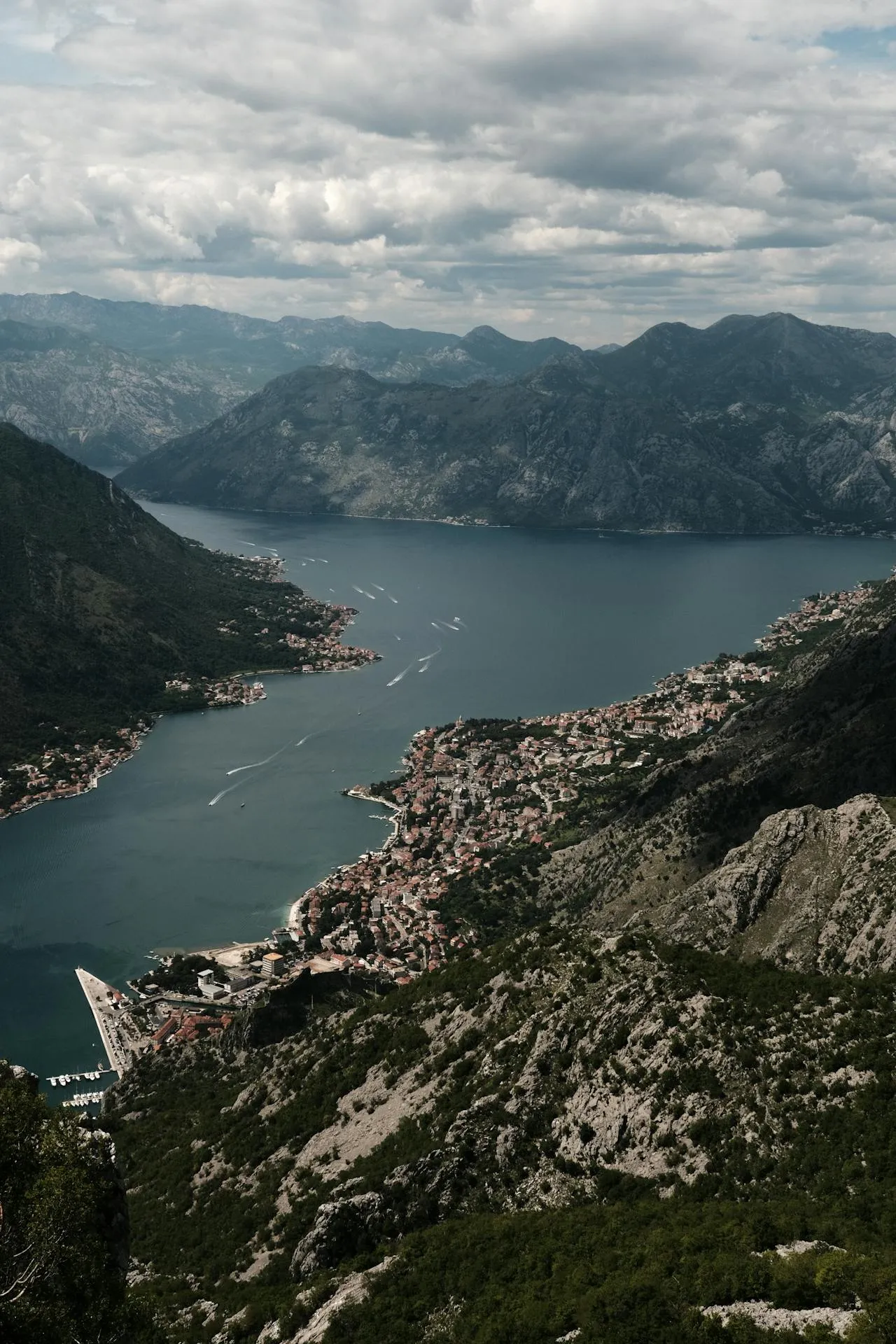
Day Trips from Kotor
Perast sits 20 minutes back along the bay road toward Herceg Novi. The baroque village faces two tiny islands, St. George, with its cypress-shaded Benedictine monastery, and Our Lady of the Rocks, a man-made island where sailors have tossed rocks since 1452. A water taxi from the harbour costs a few euros. The baroque village of Perast is just 15 minutes further along the bay.
The old royal capital of Cetinje lies an hour inland through dramatic mountain switchbacks. The monastery houses sacred relics, while the former Royal Court preserves the artefacts and photographs of Montenegro's brief kingdom. The drive itself, climbing from sea level to the Lovćen plateau, is as memorable as the destination.
Montenegro's royal palace from 1871, now a museum displaying art, artefacts, and photographs from the nation's royal history. Nestled beside the monastery in the quiet streets of the former capital.